

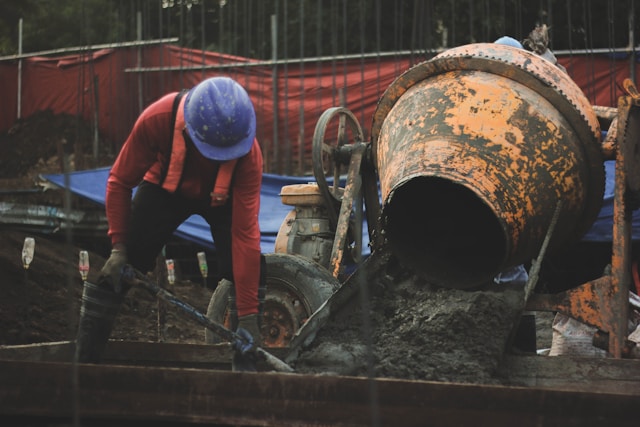
Most contractors know that concrete slurry is the bane of their existence, a right nuisance. Few however understand that it’s a serious regulatory liability just waiting to get them in hot water. By the time that slurry ends up in a stormwater drain or has soaked into the soil next door the compliance issue is already a done deal, all that remains is figuring out who is on the hook. To avoid getting tied up in regulatory knots you need a solid grasp of just what concrete wastewater contains, and what the federal and state frameworks actually require, and even for small sites operating below residential scale that knowledge has become almost as vital as having a reliable tool kit.
What Actually Goes To Make Up Concrete Wastewater?
Concrete slurry is not just dirty water, it’s a suspension of teeny tiny concrete particles and all sorts of other nasty stuff like free silica, calcium hydroxide and other alkaline compounds which get released when cutting, grinding, drilling and demolishing concrete. The pH reading is way above neutral, high enough to actually do real harm to the local soil chemistry and environmental.
By the time you see it and think “oh that’s just a bit of dirty water” damage is already being done. Diluting it won’t fix the problem, it’s just dispersing the nasty bits into the stormwater system.
Those small particles of free silica are classified as a hazardous substance under Australia’s WHS laws and the risk of exposure is not just limited to when the slurry is wet either, it can be particularly hazardous when the site is being cleaned up because those fine particles can become airborne and inhaled.
The Nitty Gritty Of The Regulatory Framework
Your state EPA will be looking at how you handle your concrete wastewater and there are some pretty serious penalties for getting it wrong. In Victoria under the Environment Protection Act 2017 just chucking the stuff down the stormwater drain can land you in trouble, and its much the same in other states too. Generally speaking a standard construction site permit won’t actually cover you for liquid concrete waste, you need to get a special licence for that sort of thing.
The reality is that you’ve got multiple obligations to meet here, the EPA will have rules, your local council will have their own bylaws which are likely to cover drainage etc, and on top of all that the principal contractor has a duty of care that includes keeping an eye on what their subcontractors are up to. So if some bloke from a concreting firm is chucking the slurry out across the footpath it’s not just a problem for him, the bloke higher up the food chain who hired him is likely to be exposed too.
Solidification, The Best Line Of Defence
Solidification is a way of chemically converting that liquid slurry into something you can safely handle and transport. Once it’s been converted it’s a whole different ball game, transport risk is much lower and so is the risk of it spreading out and making a mess when it’s raining. On an active site solidification is a real game changer because it’s so quick, the cleaned up area is usable again in no time and the solid waste is easy to handle and move around.
For those really tricky scenarios where you’ve got a big volume of liquid to deal with or your drainage system just can’t cope with the volume of concrete wastewater coming through solidification is usually the best place to start. It’s not a substitute for a proper slurry management system, but it can certainly help to anchor one.
Dewatering, Filtration, And What Compliant Sites Really Look Like
Dewatering bags and gravity separation systems take out suspended solids prior to discharging any water. High-production sites will benefit more from mechanical separation, whereas lower volume sites that produce slurry intermittently will likely be able to use gravity methods. The difference is in filtration that complies with EPA regulations and filtration that is merely a cosmetic solution to the problem.
Compliant sites almost never use only one technology. Containment first, separation or solidification second, and either filtered discharge or solid removal third, is the process that reliably meets all the expectations of the EPA. Sites that are close to public infrastructure, drainage points, or sensitive environmental areas should include containment as a precondition for all other solutions.

Where The Industry Is Going?
More and more often project owners and head contractors demand documented concrete waste water disposal plan before even starting the work, rather than reactive clean-up plan after a spill has already taken place. The planning cost is a very small part of the clean-up cost, which keeps increasing with each new EPA regulation. Separated water can be reused for various site processes, if quality requirements allow for it.